One of the most common questions we get from landowners in Smithville, Cookeville, and across Middle Tennessee is, 'What happens to all the wood chips?' The answer is simple: we leave them right where they fall, and your soil will thank you for it. But the benefits of forestry mulching go far beyond just dealing with debris. It is a comprehensive land management solution that transforms overgrown, unusable property into beautiful, accessible land while actively improving the local ecosystem.
Quick Answer (TL;DR)
Forestry mulching instantly stops soil erosion, suppresses weeds, retains moisture, and returns rich organic matter back to the earth as the mulch breaks down. It's faster, more cost-effective, and far better for the environment than traditional bulldozing.
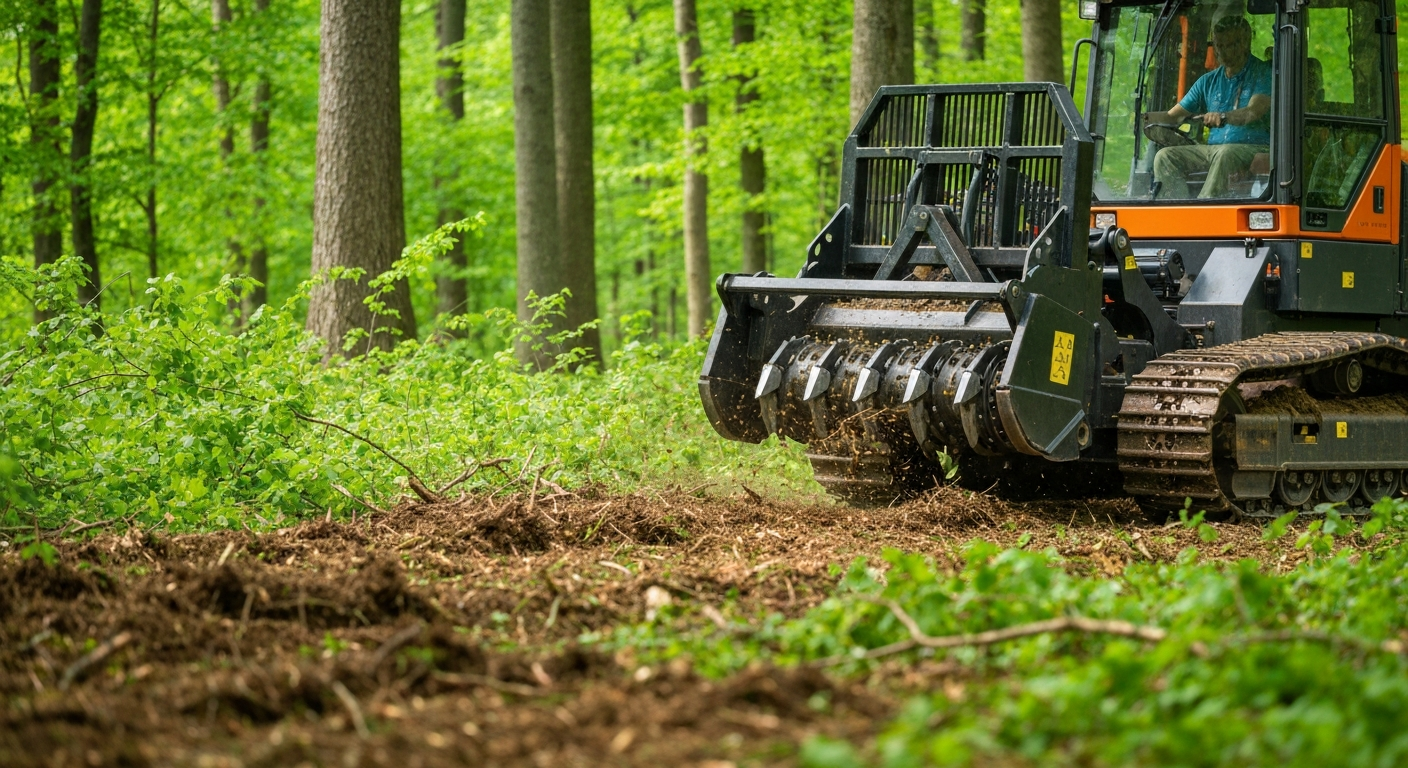
Table of Contents
- Why Forestry Mulching Is Better Than Traditional Land Clearing
- Environmental Benefits & Soil Health
- Preventing Soil Erosion on Steep Hillsides
- Wildlife Habitat Improvements & Hunting Land
- Fire Prevention Benefits
- Cost Savings Compared to Traditional Clearing
- Best Uses for Forestry Mulching in Middle Tennessee
- Common Myths About Forestry Mulching
- Main Problems
- Our Process
- Common Mistakes
- FAQs
Why Forestry Mulching Is Better Than Traditional Land Clearing
For decades, the standard approach to land clearing in Middle Tennessee involved heavy bulldozers, excavators, and massive burn piles. While this method gets the job done, it comes at a steep cost to both your wallet and your property's health. When you choose forestry mulching, you are opting for a modern, efficient, and highly targeted approach to woodland management.
Traditional land clearing strips away the topsoil—the most nutrient-rich layer of your land. When bulldozers scrape the earth, they remove the organic matter necessary for healthy plant growth. Furthermore, the heavy tracks of these machines compact the soil, making it difficult for new root systems to establish themselves. This compaction can lead to long-term drainage issues and stunted vegetation growth.
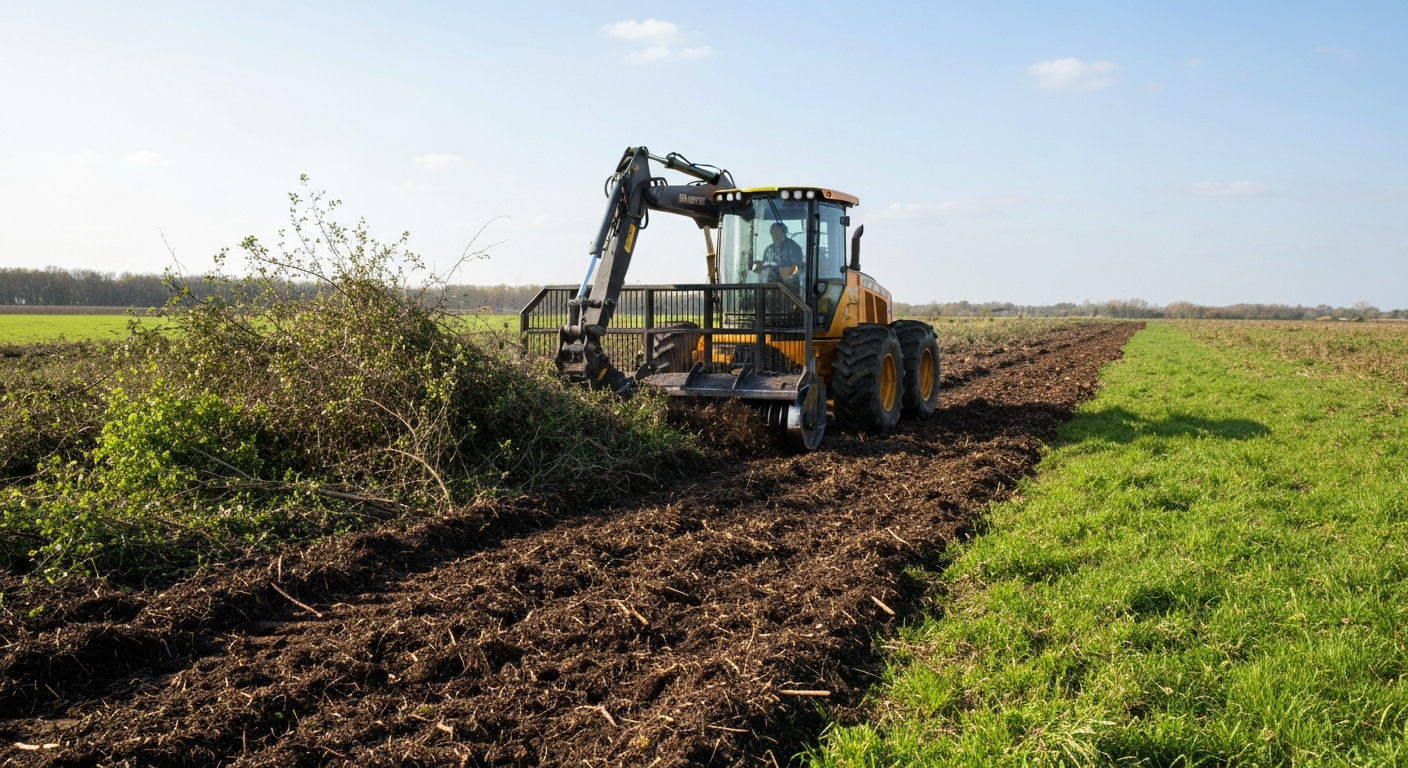
Forestry mulching, on the other hand, is a single-step process. Our specialized equipment drives over the vegetation, grinding brush, vines, and small trees directly where they stand. The root systems of the removed plants are left in the ground to decompose naturally, which prevents the soil from washing away during heavy Tennessee rains. There are no burn piles, no haul-off fees, and no permanent scars on your land.
Forestry mulching preserves topsoil and leaves a protective layer of mulch, unlike traditional bulldozing which scrapes the land bare.
Environmental Benefits & Soil Health
Forestry mulching is widely considered the most environmentally responsible method for clearing land. Because the machinery grinds the vegetation on-site, it eliminates the carbon emissions associated with hauling debris to a landfill or burning massive piles of brush.
More importantly, the process actively improves soil health. As the layer of organic mulch breaks down over time, it returns essential nutrients back into the earth. This natural decomposition acts as a slow-release fertilizer, enriching the soil and promoting the growth of native grasses and desirable vegetation.
The mulch layer also plays a critical role in moisture retention. During the hot, dry summers in Middle Tennessee, the mulch acts as a barrier that slows evaporation, keeping the underlying soil moist and healthy. This is especially beneficial if you plan to reseed the area or plant new vegetation after the clearing is complete.
Preventing Soil Erosion on Steep Hillsides
Middle Tennessee is known for its rolling hills and steep terrain. When these slopes are cleared using traditional methods, the exposed soil is highly susceptible to erosion. A single heavy rainstorm can wash away inches of valuable topsoil, creating deep ruts and sending sediment into nearby creeks or ponds.
Forestry mulching effectively eliminates this risk. By leaving the root structures intact and covering the ground with a thick layer of mulch, the soil remains stabilized. The mulch absorbs the impact of falling rain and slows down water runoff, allowing it to soak into the ground naturally.
This makes forestry mulching the only responsible choice for steep hillside clearing. Whether you're clearing a path for a driveway, opening up a view, or managing overgrown slopes, mulching ensures your land stays exactly where it belongs.
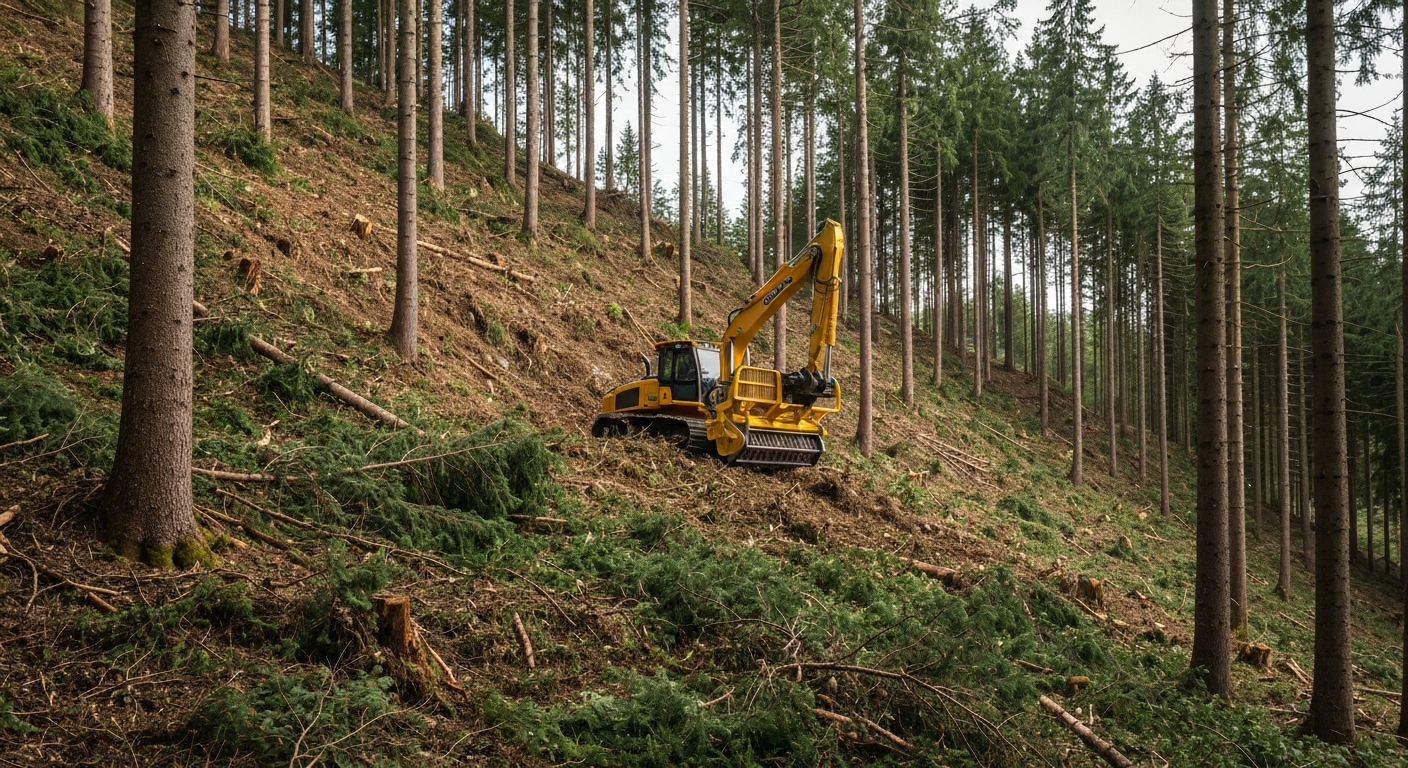
The dense layer of mulch acts as a natural barrier, stabilizing the soil and preventing erosion even on steep slopes.
Wildlife Habitat Improvements & Hunting Land
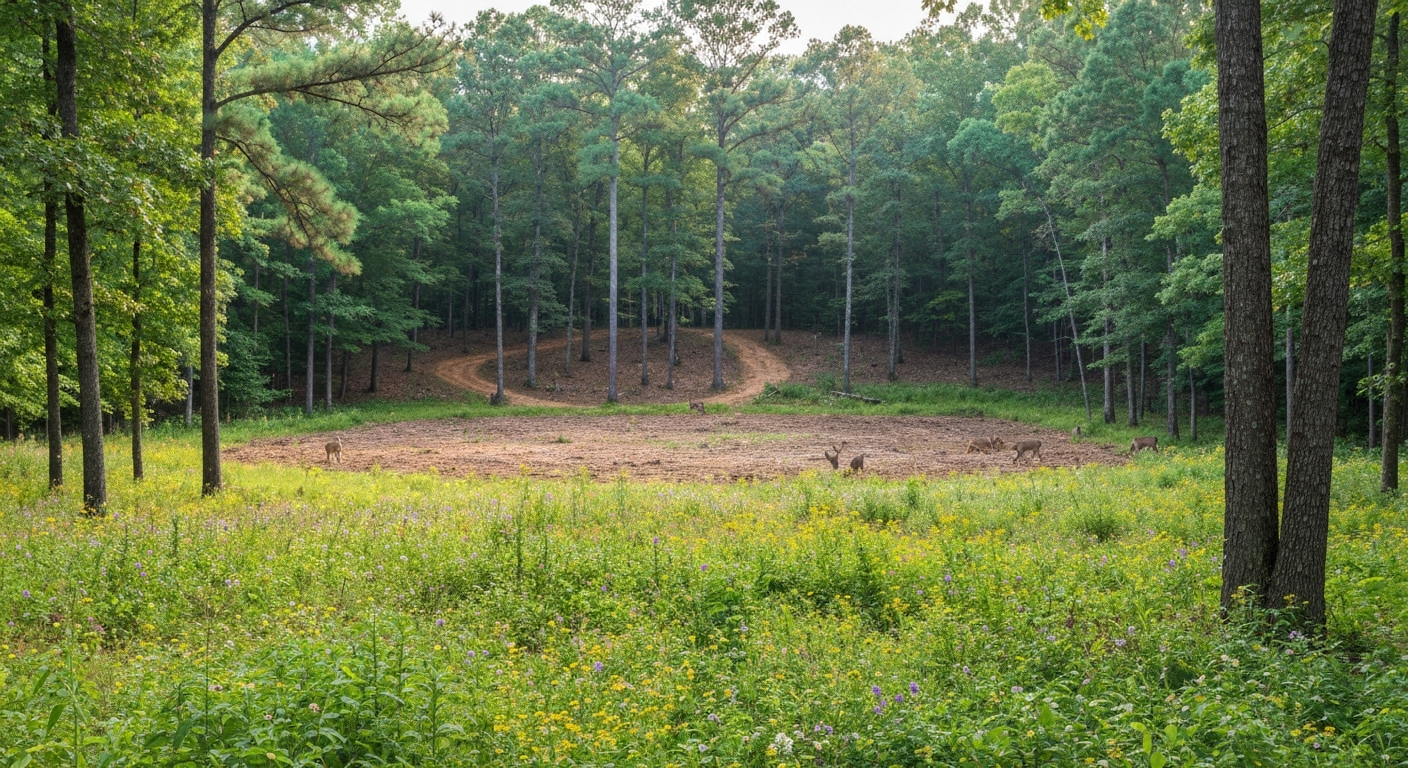
Many landowners in areas like Sparta and McMinnville use their property for hunting and recreation. Forestry mulching is an incredible tool for wildlife habitat management. By selectively clearing dense, overgrown underbrush, you can open up the forest floor and encourage the growth of natural forage that deer, turkey, and other wildlife rely on.
We frequently use forestry mulching to clear shooting lanes, create quiet access trails, and prep food plots. Because the process is highly selective, we can easily navigate around mature, mast-producing trees like oaks and hickories, preserving the essential food sources for local wildlife.
Furthermore, by removing invasive species and thick briar thickets, you create a more navigable and inviting environment for both wildlife and hunters. The resulting trails are quiet to walk on, and the cleared areas quickly bounce back with fresh, tender green growth that animals love.
Fire Prevention Benefits
While Middle Tennessee may not experience the massive wildfires seen in the western United States, brush fires are still a significant risk, especially during dry seasons. Overgrown properties accumulate dead wood, dry vines, and thick brush—often referred to as 'ladder fuels.' These fuels allow a small ground fire to quickly climb into the tree canopy where it becomes much harder to control.
Forestry mulching mitigates this risk by grinding these ladder fuels directly into the ground. By clearing defensible space around your home, barns, and outbuildings, you create a safety buffer that can stop a brush fire in its tracks.
Proactive fire prevention through forestry mulching not only protects your property but also gives local fire departments a better chance of defending your structures in the event of an emergency.
Cost Savings Compared to Traditional Clearing
One of the most appealing benefits of forestry mulching is the cost savings. Traditional land clearing often requires a fleet of equipment: a bulldozer to push the trees, an excavator to dig out the stumps, and dump trucks to haul the debris away. Each piece of equipment comes with its own mobilization fee, operator cost, and fuel expense.
Forestry mulching requires only one machine and one operator. Because the vegetation is processed on-site, there are no haul-off fees, no tipping fees at the landfill, and no need to pay for a burn permit or manage a dangerous fire.
In addition to the immediate savings, forestry mulching saves you money in the long run. You won't need to purchase expensive topsoil to replace what a bulldozer scraped away, and you won't need to pay for extensive erosion control measures like silt fencing or hydroseeding.
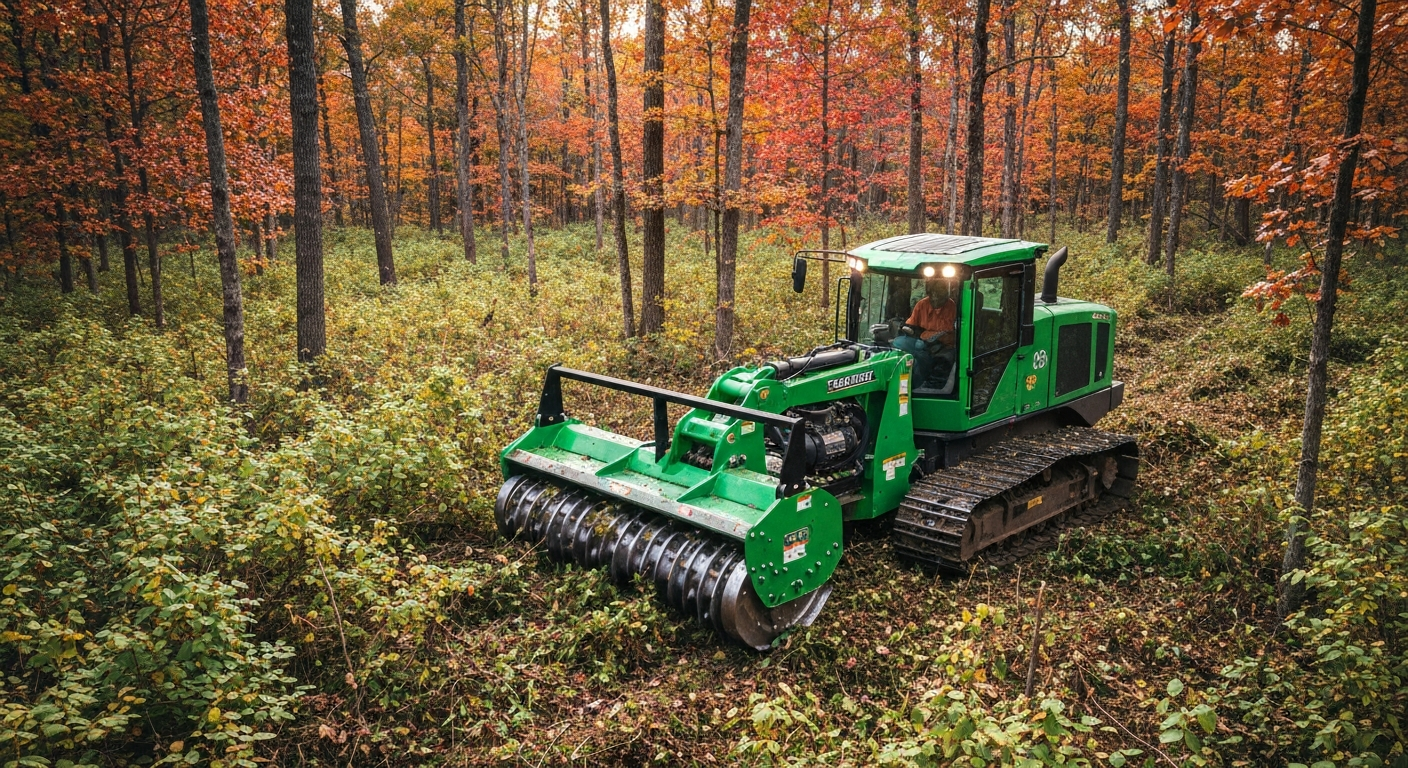
A single machine handles the cutting, grinding, and cleanup, significantly reducing overall project costs.
Best Uses for Forestry Mulching in Middle Tennessee
Forestry mulching is incredibly versatile and can be used for a wide variety of land management projects. Some of the most common applications we handle across Smithville, Lebanon, and Murfreesboro include:
- Property Line & Fence Line Clearing: Quickly opening up overgrown boundaries for new fencing or surveying.
- Trail Creation: Cutting smooth, accessible paths for ATVs, horses, or hiking.
- Pond & Lake Clearing: Removing thick brush around waterways without risking sediment runoff into the water.
- New Construction Prep: Clearing building sites and driveways while minimizing soil disturbance.
- Pasture Reclamation: Taking back overgrown fields and turning them into usable agricultural land.
- Invasive Species Removal: Eradicating fast-spreading plants like privet, honeysuckle, and autumn olive.
Common Myths About Forestry Mulching
Myth: The mulch will attract termites to my house.
Fact: When forestry mulching is performed correctly, the mulch is spread thinly and evenly across the ground. It dries out quickly and decomposes naturally. Termites require large, damp, concentrated piles of wood to thrive. As long as the mulch isn't piled thickly against your foundation, it does not pose a termite risk.
Myth: Forestry mulching leaves ugly, sharp stumps everywhere.
Fact: While a standard tractor with a bush hog might leave jagged stumps, a professional forestry mulcher grinds the vegetation flush with the ground. The resulting surface is smooth enough to drive over or mow.
Myth: It's too expensive for small properties.
Fact: Because forestry mulching is so fast and requires no haul-off fees, it is often the most economical choice even for smaller residential lots or selective clearing projects.
The Problem
- Severe soil erosion on sloped properties after traditional clearing
- Rapid regrowth of invasive weeds and brush due to exposed soil
- Loss of soil moisture during dry Tennessee summers
- Depleted soil nutrients from aggressive scraping and topsoil removal
- Expensive haul-off fees and dangerous burn piles
- Damage to the root systems of mature, desirable trees
Our Process
Site Evaluation
We walk your property in Smithville, Sparta, or surrounding areas to identify your goals, mark trees to save, and assess the terrain.
Targeted Brush Grinding
Our tracked forestry mulchers systematically process thick brush, invasive species, and saplings into fine mulch.
Erosion Control & Distribution
The mulch is spread evenly across the cleared area, forming a protective blanket over the vulnerable topsoil.
Nutrient Return
Over the next 1-3 years, the mulch naturally decomposes, feeding the soil and promoting healthy new growth.
Weed Suppression
The thick layer of mulch blocks sunlight from reaching the soil, significantly reducing the sprouting of new weeds.
Common Mistakes to Avoid
Leaving Land Bare
Bare soil washes away quickly during heavy Middle Tennessee rains, leading to severe erosion, deep ruts, and property damage.
Burning Debris
Burning destroys organic matter that could have enriched the soil and poses a significant wildfire risk to surrounding properties.
Using Undersized Equipment
Trying to clear thick brush with a standard bush hog leaves dangerous, sharp stumps and doesn't process the material finely enough to decompose properly.
Clearing Too Close to Waterways
Removing all vegetation near ponds or creeks without leaving a mulch barrier can cause immediate bank collapse and water contamination.
Scraping the Topsoil
Allowing a bulldozer to scrape away the top 2-4 inches of soil removes decades of natural composting and leaves the land sterile.
Frequently Asked Questions
The Final Takeaway
Forestry mulching doesn't just clear your land; it actively improves the health, accessibility, and stability of your property for years to come. It is the smart, sustainable choice for Middle Tennessee landowners.
Ready to Reclaim Your Land?
- Free On-Site Estimates
- Fast, Eco-Friendly Clearing
- Locally Owned & Operated