A pond or small lake should be the centerpiece of your rural Tennessee property. Unfortunately, without regular maintenance, pond banks quickly become overgrown with thick willows, thorny bushes, and invasive weeds. This overgrowth ruins the view, makes fishing impossible, and creates a haven for snakes and pests.
Quick Answer (TL;DR)
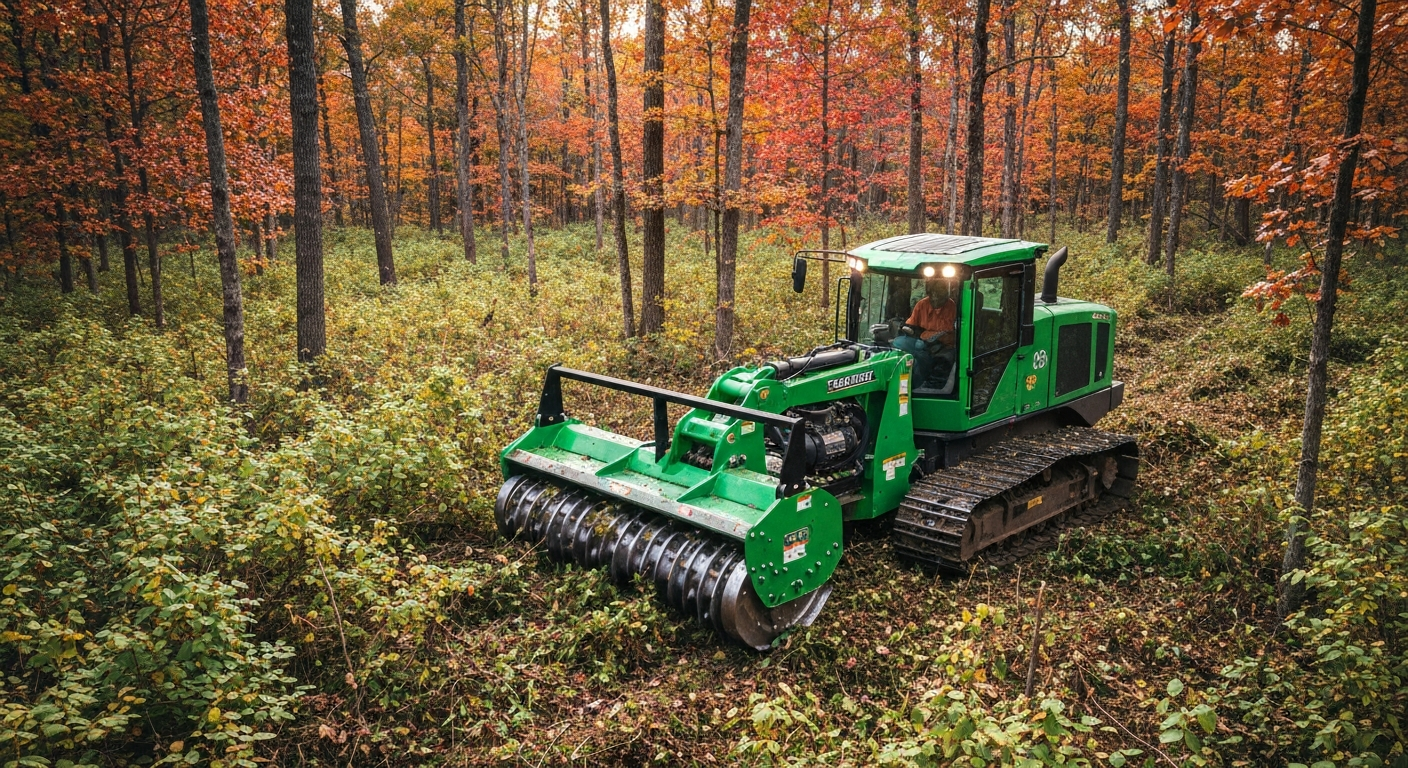
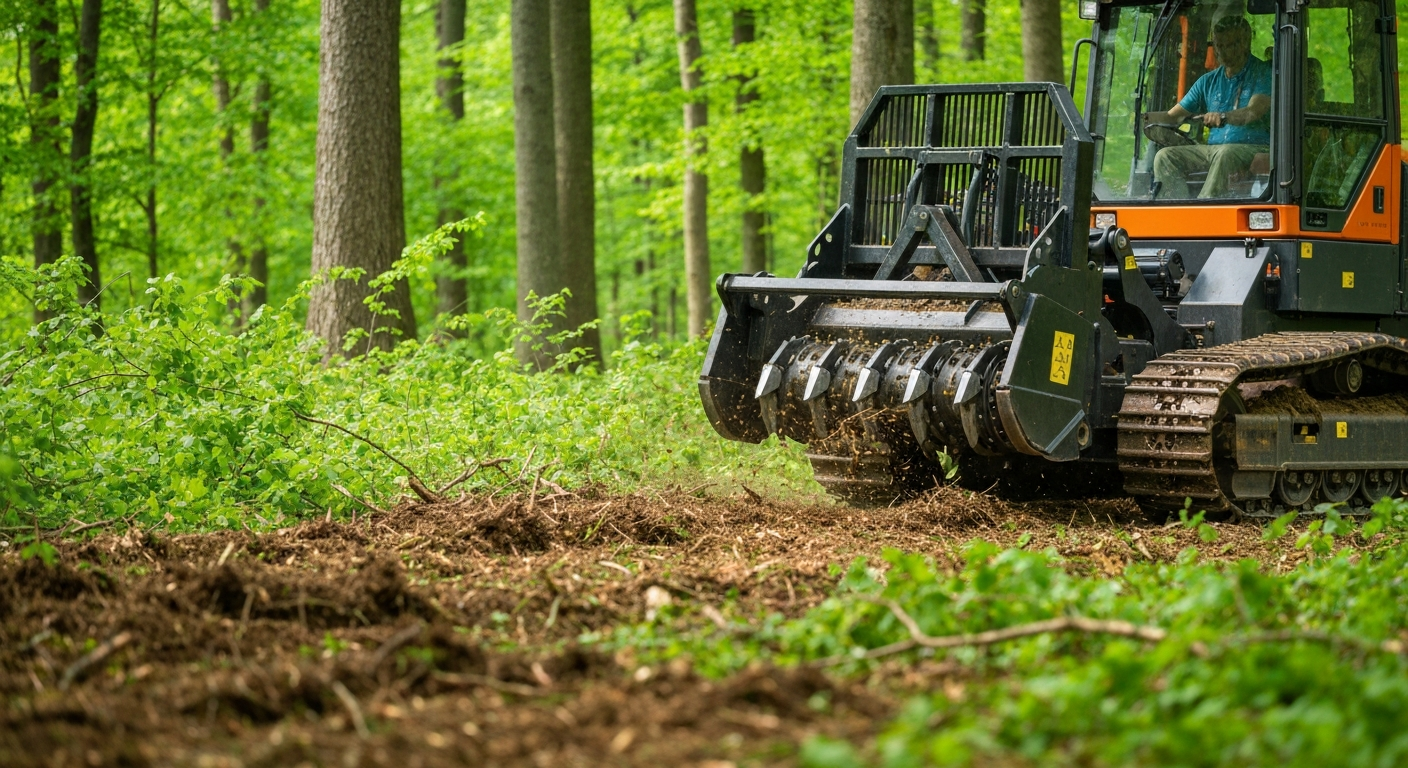
Forestry mulching is the safest and most effective way to clear overgrown pond and lake banks. It removes the unwanted brush while leaving the root systems intact, which prevents the bank from collapsing and eroding into the water.
Table of Contents
The Dangers of Bank Erosion
The biggest mistake property owners make when clearing a pond is using a bulldozer or excavator to rip out the brush. When you uproot vegetation on a steep bank, you destroy the structural integrity of the soil.
The next time it rains, that loose dirt will wash directly into your pond, making the water muddy, reducing its depth, and causing the bank to collapse. Forestry mulching solves this by grinding the brush above ground. The roots stay in place to hold the soil, and the mulch acts as a protective blanket against rain.
Improving Water Access and Views
An overgrown pond is a wasted asset. By selectively mulching the shoreline, we can open up beautiful views from your home or cabin. We can clear specific areas for fishing access, boat launches, or relaxing by the water, transforming a swampy mess into a park-like setting.
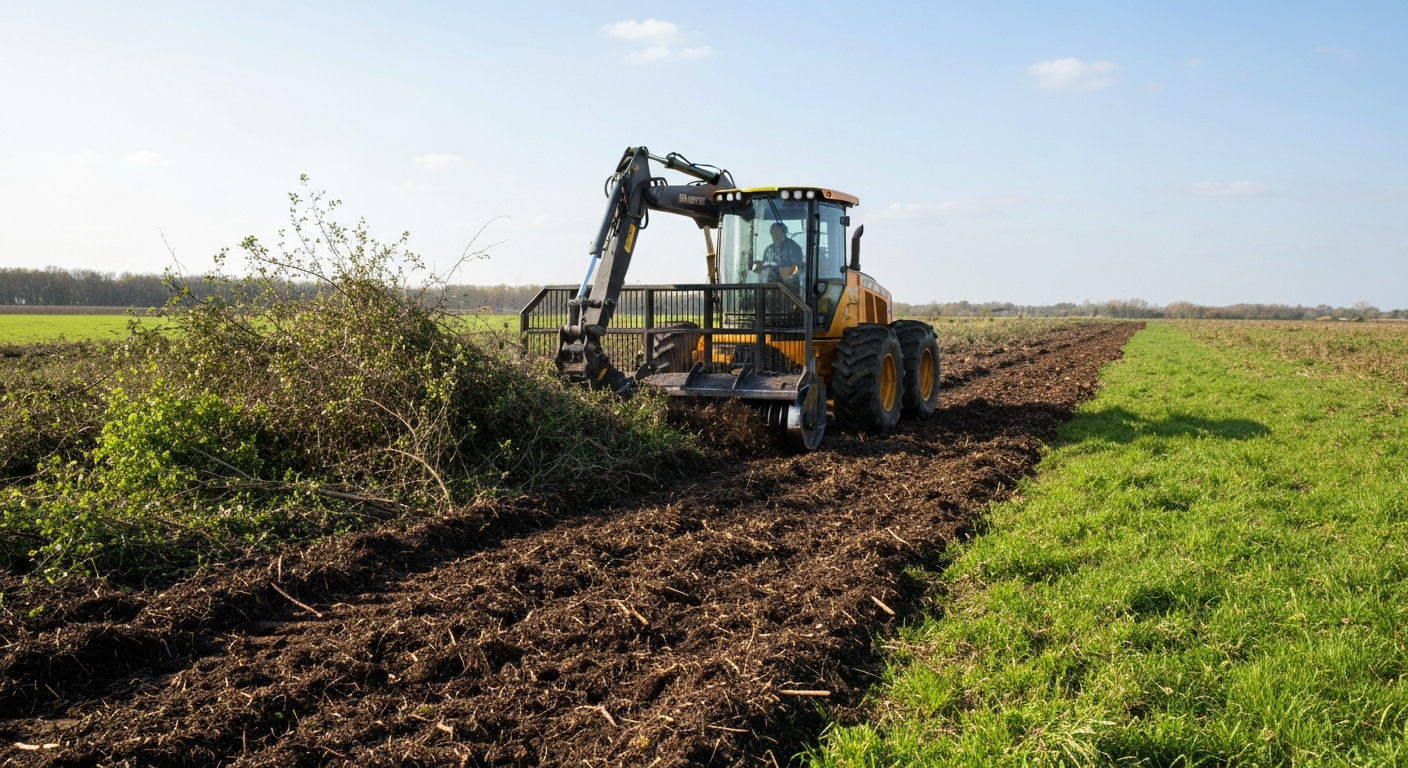
Clearing pond banks with a mulcher improves access while protecting the water from sediment runoff.
Managing Snakes and Pests
Thick, overgrown vegetation near water is the perfect habitat for snakes, rodents, and mosquitoes. By removing the dense brush and allowing sunlight to hit the banks, you drastically reduce the presence of these unwanted pests, making the area safer for your family and pets.
The Problem
- Loss of water views and property aesthetics
- Inability to access the pond for fishing or recreation
- High risk of bank erosion if cleared improperly
- Overgrowth creating a breeding ground for snakes and mosquitoes
- Willows and invasive trees draining water from the pond
Our Process
Bank Assessment
We evaluate the slope and stability of your pond banks.
Selective Clearing
We carefully grind away the brush, willows, and weeds while avoiding the water.
Root Preservation
We leave the root systems intact to ensure the bank remains structurally sound.
View Restoration
We open up lines of sight from your home or driveway to the water.
Common Mistakes to Avoid
Using an Excavator
Digging out roots on a pond bank guarantees severe erosion and muddy water.
Using Herbicides Near Water
Spraying heavy chemicals to kill brush can poison your pond, killing fish and frogs.
Leaving Cut Brush
Cutting brush with a chainsaw and leaving it on the bank looks messy and eventually rots into the water.
Frequently Asked Questions
The Final Takeaway
Reclaim your waterfront property safely. Forestry mulching restores the beauty and accessibility of your pond without risking bank collapse or muddy water.
Ready to Reclaim Your Land?
- Free On-Site Estimates
- Fast, Eco-Friendly Clearing
- Locally Owned & Operated