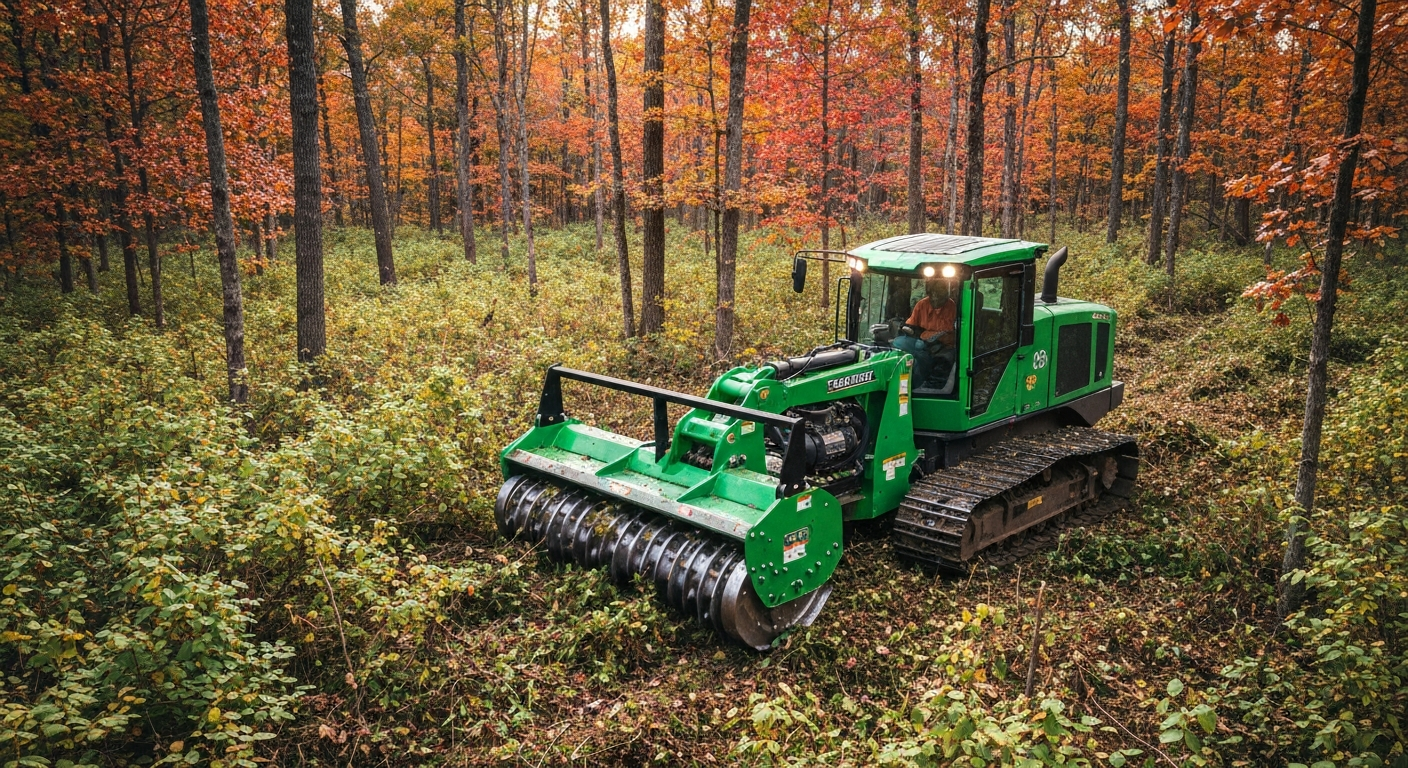
Dense underbrush, dead vines, and thick saplings act as 'ladder fuels'—allowing ground fires to climb into the tree canopy where they become uncontrollable. For homeowners in wooded areas of Smithville, Sparta, and surrounding counties, this is a serious risk that requires proactive management.
Quick Answer (TL;DR)
Forestry mulching grinds dangerous ladder fuels into the ground, creating a defensible space around your home that significantly reduces the risk of devastating wildfires and protects your property.
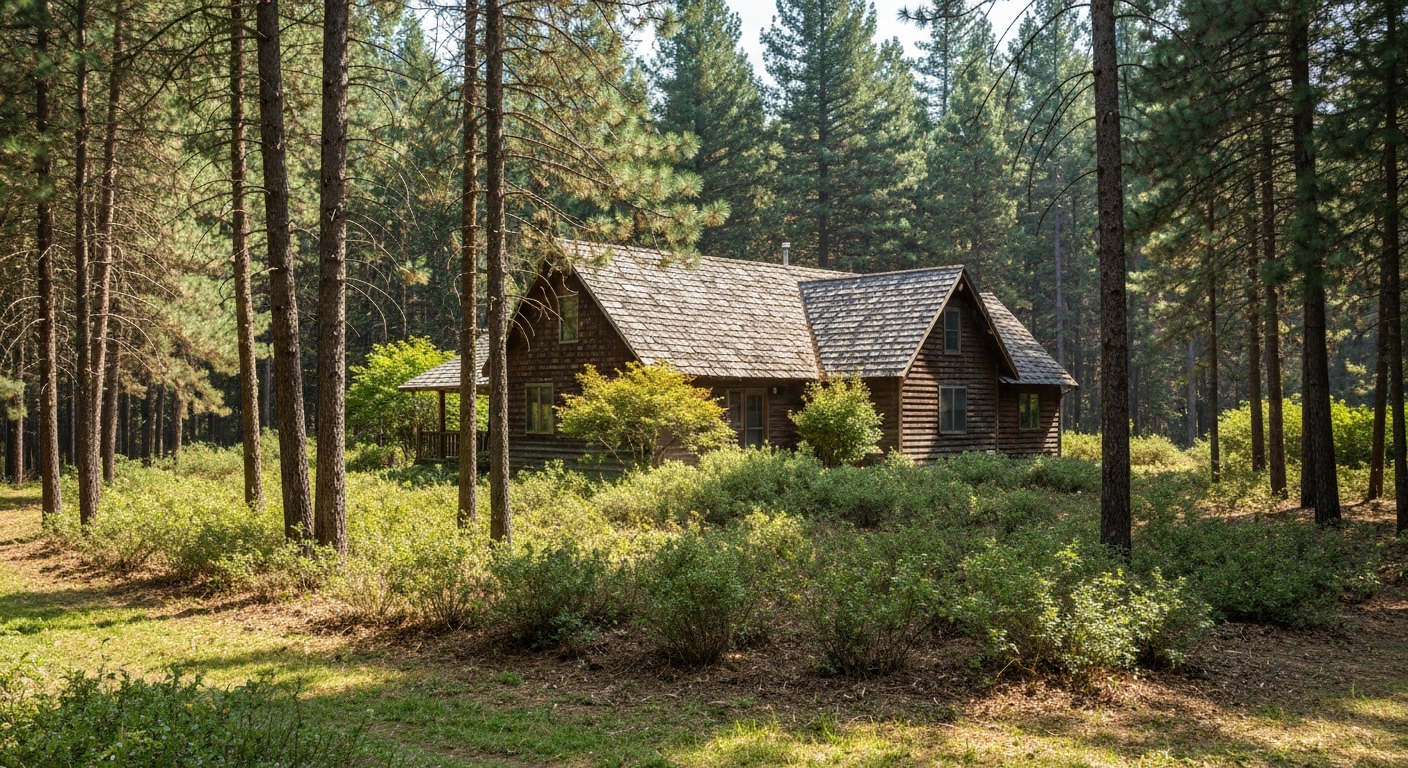
Table of Contents
Understanding Ladder Fuels
A ladder fuel is any vegetation that allows a fire to climb from the forest floor up into the tree canopy. This includes tall grasses, shrubs, small trees, and dead vines hanging from branches. When a fire reaches the canopy, it spreads rapidly and becomes incredibly difficult for firefighters to extinguish.
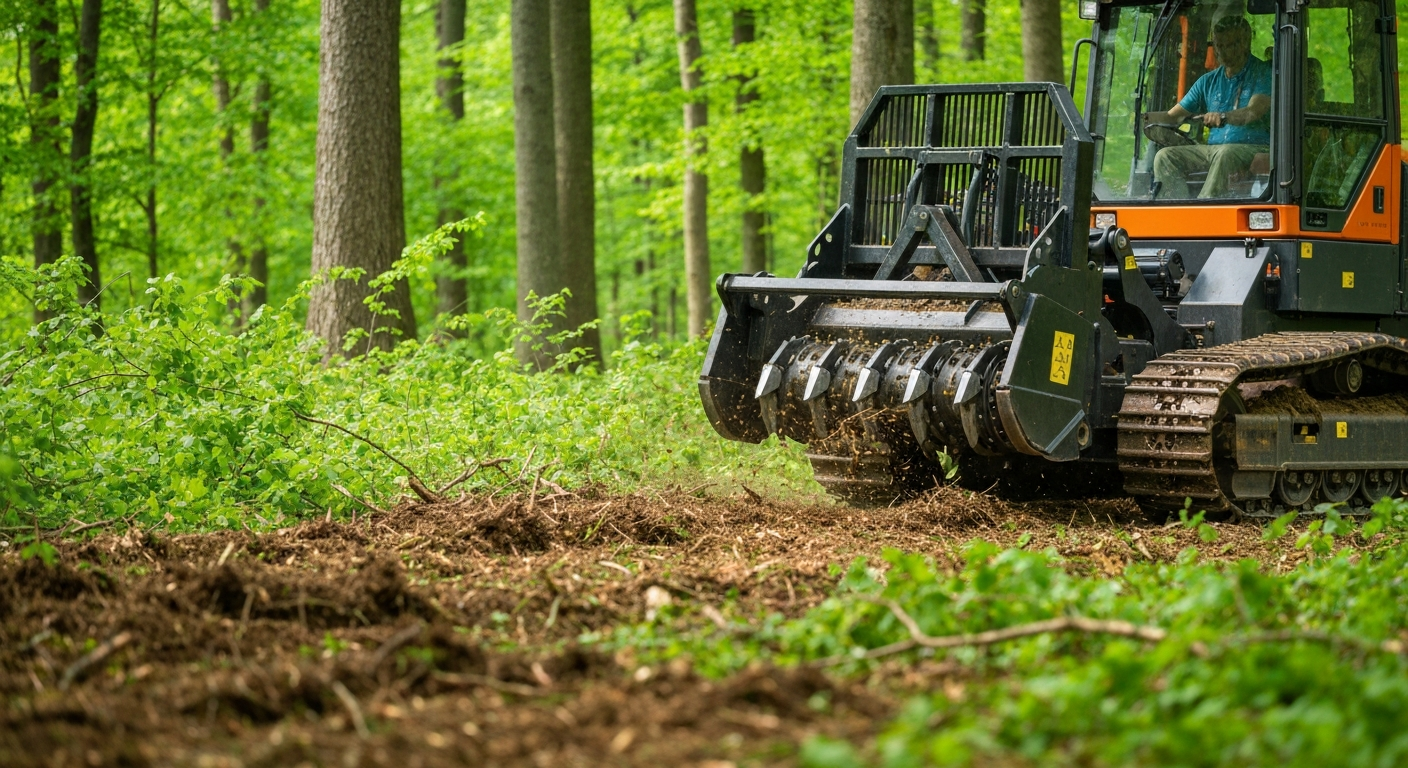
Forestry mulching eliminates ladder fuels by grinding this mid-level vegetation down to the ground. The resulting mulch lies flat against the moist earth, making it much harder to ignite.
Creating Defensible Space
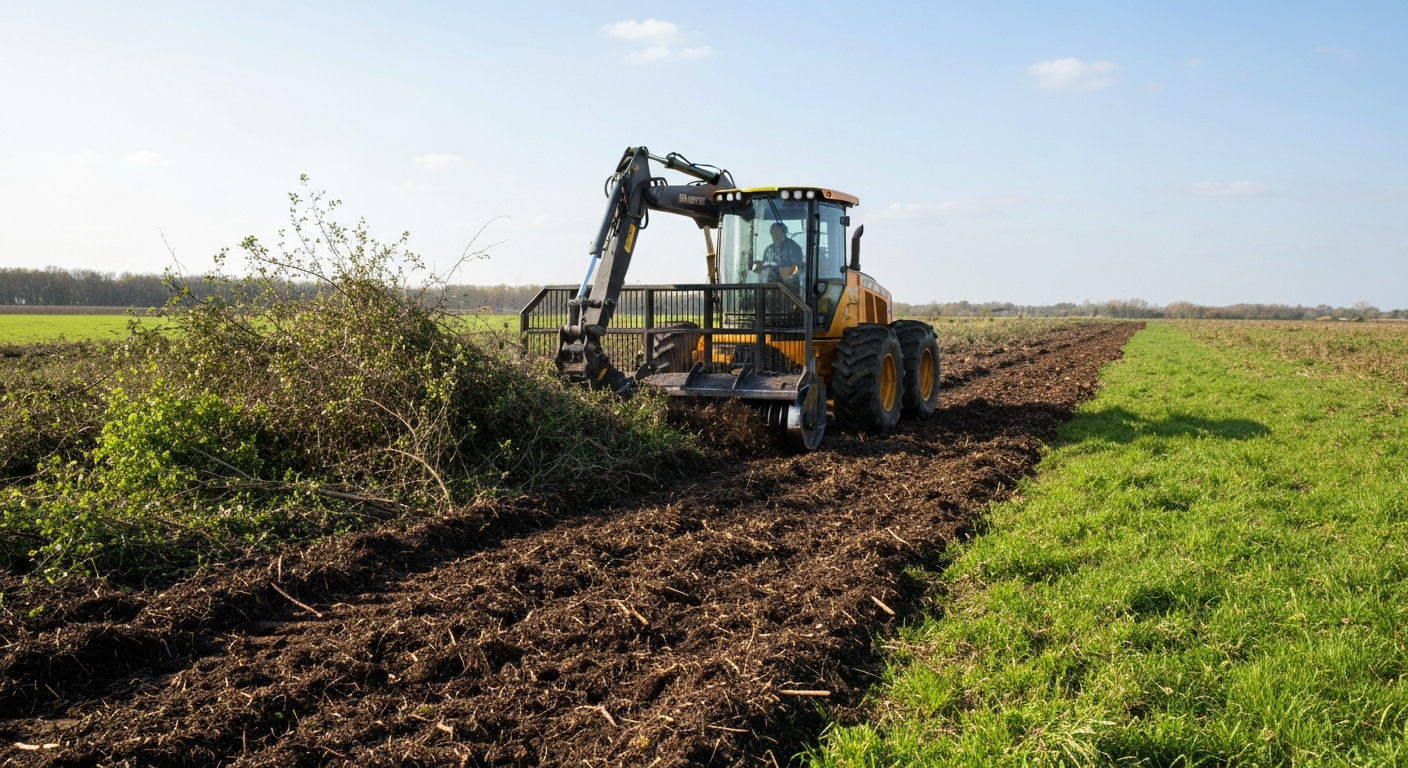
Defensible space is a buffer zone between your home and the surrounding wildland area. By clearing thick brush 30 to 100 feet away from your structures, you give your home a fighting chance during a wildfire.
This buffer not only slows the spread of the fire but also provides a safe, cleared area for local fire departments to position their trucks and defend your property.
Creating a defensible space around your home is the best defense against brush fires.
Protecting Barns and Outbuildings
It's not just your primary residence at risk. Barns, sheds, workshops, and detached garages are often surrounded by overgrown vegetation. Forestry mulching is the perfect way to clear the perimeter of these outbuildings, protecting your valuable equipment and livestock from encroaching fires.
The Problem
- Thick underbrush acting as ladder fuel for fires
- Dead and dying vegetation accumulating near structures
- Lack of access for emergency fire vehicles
- Overgrown property lines threatening neighboring lands
- High risk of rapid fire spread during dry Tennessee summers
Our Process
Risk Assessment
We identify high-risk vegetation close to your home, barns, and outbuildings.
Defensible Space Creation
We clear a safety buffer zone around your structures, typically 30-100 feet wide.
Fuel Grinding
We mulch the hazardous brush, keeping the material flat on the ground where it is less flammable.
Access Improvement
We ensure driveways and paths are wide and clear enough for large emergency vehicles.
Common Mistakes to Avoid
Ignoring the Underbrush
Many homeowners focus on large trees but ignore the highly flammable brush below.
Piling Debris
Creating large brush piles near your home actually increases your fire risk.
Waiting for a Drought
The best time to clear fire hazards is before the dry season begins.
Frequently Asked Questions
The Final Takeaway
Don't wait for a dry season. Protect your home, outbuildings, and family by creating defensible space with professional forestry mulching.
Ready to Reclaim Your Land?
- Free On-Site Estimates
- Fast, Eco-Friendly Clearing
- Locally Owned & Operated